· by Rédaction
Witnessing Things Go Wrong on Video Chat: What Men Can Do Instead of Hitting Next
On random video chat, men sometimes end up watching a woman being treated abusively — in a group chat, a shared room, or a multi-person session. What bystander intervention research says, and the gestures that genuinely make a difference.

In every discussion about harassment on video chat, two people are always described: the one who crosses the line and the one on the receiving end. There is almost always a third, and that third person is the quietest of all. The bystander.
That third position comes up more often than you'd think on a random video chat service: a multi-person chat room, an exchange where two people share the same screen, a session where someone shows you a screenshot or replays a clip from another conversation, a parallel text channel where comments about a female user scroll by. In the vast majority of these situations, the bystander is a man. And in the vast majority of these situations, he does exactly the same thing: nothing. He hits "next".
We have already covered the perspective of the woman on the receiving end — the first thirty seconds seen from the other side, the risk of screenshots and AI "nudification", and the reasons that push female users to leave for good. This article tackles an angle never addressed here before: what, concretely, does the person watching actually do?
Why the Bystander Almost Never Moves
A phenomenon documented for fifty years
Social psychology has a name for this: the bystander effect, first described in 1968 by researchers John Darley and Bibb Latané. Their counter-intuitive conclusion fits in a single sentence: the more witnesses there are to a problematic situation, the less each one of them intervenes. Responsibility dissolves into the crowd.
Latané and Darley went on to model intervention as five successive steps. For a bystander to act, he must:
- notice the event;
- interpret it as a problem;
- feel responsible for acting;
- know what to do;
- decide to do it.
Each step is a filter. On random video chat, all five collapse almost simultaneously: the exchange is brief, ambiguity is at its peak ("she was laughing, wasn't she?"), anonymity cancels out any sense of responsibility, and nobody has ever been taught the practical steps to take. The result: "next" becomes the default exit.
The special case of online environments
More recent work on digital harassment confirms the mechanism and adds one more factor: online, the bystander is mainly afraid of retaliation. He knows the perpetrator can turn on him, insult him, even start harassing him in turn. The so-called "girl on the bus" case, in which a young woman called out her harasser on TikTok and ended up receiving death threats in February 2026, was discussed in the French press as a brutal reminder: speaking up has a cost. That calculation is not irrational. It explains a good part of the silence.
There is another reason, more comfortable and more false: the idea that the platforms take care of it. European studies on reporting show the opposite — the vast majority of problematic content is never reported, not out of indifference, but because users don't know the button exists, or doubt it will achieve anything.
The bystander is not a coward. He's someone without a script. A script can be learned in ten minutes.
The Only Three Gestures That Change Anything
Bystander intervention training programmes — highly developed in Anglo-Saxon universities and taken up by several French-language prevention campaigns — converge on one simple idea: never aim for heroism. Aim for the small, doable gesture. Three are enough.
1. Name it, briefly, without negotiating
The thing that defuses a situation isn't a three-minute moral lecture. It's a short, neutral sentence, said in a steady voice:
- "No, that's not okay."
- "Stop it, that's out of line."
- "She didn't ask for any of this."
Why does it work? Because someone behaving that way almost always operates on the assumption of tacit group approval. Research on perceived social norms shows that sexist behaviour persists largely because everyone believes everyone else finds it normal. A single dissenting voice shatters that illusion. It isn't a debate to be won, it's a signal to be sent — including to the other silent bystanders.
And then stop there. Arguing means handing over a stage. A noise-cancelling headset with microphone with a quick mute button makes this very concrete: you say your sentence, you mute, you leave. No sparring.
2. Talk to her, not to him
This is the most neglected gesture, and probably the most useful. One second of attention directed at the person being targeted changes the memory she keeps of the episode.
- "You okay? Want to switch rooms?"
- "I reported it."
- "You did nothing wrong."
Research on social support after an online incident is consistent on this point: what most reduces the psychological impact of harassment isn't punishment of the perpetrator — that rarely comes, and comes late — it's immediate validation from a third party. Knowing that at least one person present found it abnormal.
Watch out for one trap: that attention must not turn into a come-on. Following "you okay?" with "so, where are you from?" wipes out the entire benefit and files you in the same category. Say the sentence, then leave the space.
3. Report it, even when you doubt it will help
Reporting is the only gesture that leaves a usable trace. On most video chat services, it sends a recent clip of the exchange to moderation and weighs on the perpetrator's technical reputation (device fingerprint, IP range, repeated behaviour). A single isolated report often does nothing. Three converging reports on the same session change everything.
We covered how these tools work in our article on how to actually use reporting and blocking options. The key point: find out where the button is before you need it. In the heat of the moment, nobody goes looking.

The Bystander and Evidence: What Helps, What's Risky
Why the victim often needs something tangible
In France, acts that may constitute aggravated sexist insult, sexual harassment within the meaning of Article 222-33 of the Criminal Code, or sexual exhibitionism (Article 222-32) can be reported on the Interior Ministry's PHAROS platform, or through the online reporting system for sexist and sexual violence, which puts you in touch with a police officer or gendarme 24/7. The public service portal service-public.fr points out that having evidence makes everything that follows far easier. We detailed the French, Spanish, German and Brazilian legal frameworks in our article on unsolicited exhibitionism on video chat and how to report it.
A bystander can therefore help by preserving something: a timestamp, the displayed username, a screenshot of the text portion, a session number. But there is a clear limit to respect.
The red line: never keep or share a victim's image
Capturing and keeping a video of the person targeted, "as proof", amounts to producing exactly the kind of file that does the most damage. The accounts collected by Ouest-France in January 2026 from women who discovered images of themselves virtually stripped by automatic generators make this unambiguous: one image is enough. So the rule is simple:
| Do | Don't | | --- | --- | | Note the time, date and username | Record the victim's video feed | | Capture the abusive text or the link sent | Share a clip "to call it out" | | Use the platform's report button | Repost the scene elsewhere | | Ask the person whether she wants the evidence | Decide on her behalf |
The governing principle is consent: the trace belongs to the person targeted. If she wants something to file a complaint with, she'll ask. Otherwise, keep nothing.
The Real-World Situations Where a Bystander Truly Exists
Not every configuration lends itself to intervention. Best to know which is which.
The multi-person room
This is the classic situation: three or four people connected, one of them crosses the line, the others watch. Here all three gestures apply in full, and the norm effect is at its strongest — this is the case where a short sentence produces the most result.
The screen shared between friends
Two or three men in front of the same webcam, one throws out a crude joke, the others laugh out of social reflex. This is the most common and most underestimated configuration: accounts from female users describe collective laughter as more humiliating than the remark itself. The useful gesture isn't aimed at the stranger, it's aimed at your own friends. A simple "drop it, let's move on" is enough. We touched on these group sessions in our article on discretion during shared video chat.
The one-on-one exchange
Here, you're not a bystander, you're a participant. If you're the one who crossed the line, there's only one answer: apologise once, briefly, and don't insist on "making it right". Our article on consent in video chat covers this in detail.
The case where you shouldn't intervene
When the scene is staged — looped video, fake profile, redirect to a paid link — there is no victim to defend and the "bystander" is the target. The signs can be read in under a minute; we listed them in our article on fake female profiles and looped videos. In that case: report, leave, click nothing.

What It Changes at the Scale of the Service
There's one argument that speaks to those whom moral appeals don't reach: the male-female imbalance everyone complains about is partly produced by the silence of bystanders.
The mechanism is documented in our analysis of invisible attrition: a female user doesn't leave after an incident, she leaves after realising that incidents are normal. And the main indicator of normality isn't the harasser's behaviour — that gets attributed to an individual. It's the absence of reaction from everyone else, which gets attributed to an environment. Three men staying silent for ten seconds send a stronger message than the one crossing the line.
Conversely, an intervention produces a cascade effect. Studies on perceived norms online show that a single comment of disapproval markedly increases the likelihood that another bystander will speak up. The raw traffic figures, whose limitations we discussed in our article on published data, will never measure that. The women using these services measure it very accurately.
Getting Ready: Three Minutes Before Your Next Session
The ineffective bystander isn't the one who lacks courage, it's the one who improvises. A few adjustments are enough.
- Locate the report button now, not during the incident. Know whether you need to right-click, open a menu, or use a shortcut.
- Prepare one sentence, just one, the one that sounds like you. "No, not that." is enough. A rehearsed sentence always comes out better than one you have to search for.
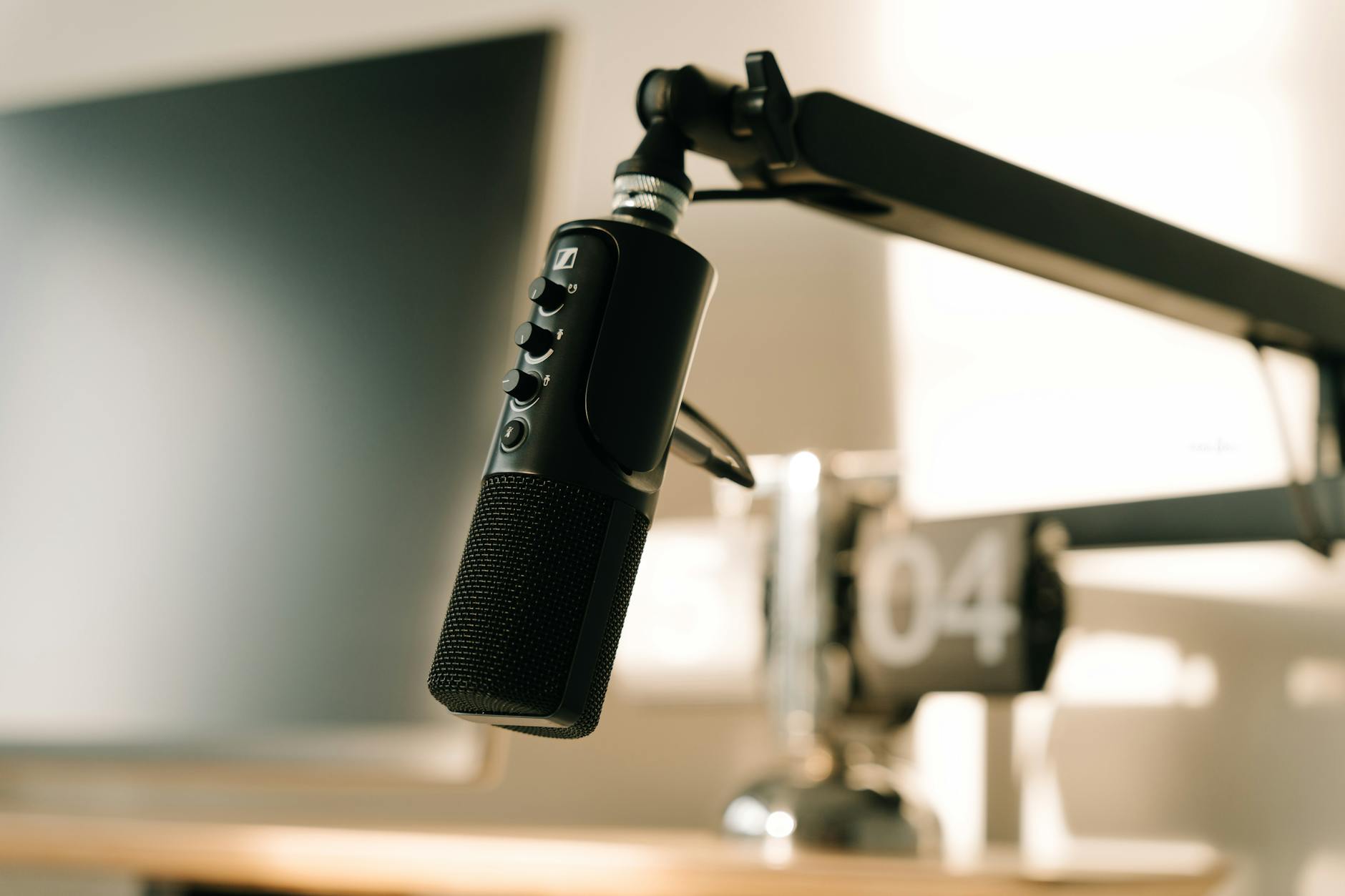
- Look after your audio. A composed sentence, clearly spoken, carries far more than a distorted shout: a USB condenser microphone makes a calm voice audible, and a calm voice is harder to ridicule than one that rises. We detailed these settings in our article on the role of sound in holding a conversation.
- Know how to cut out. A sliding webcam cover and an easily reachable mute key let you exit a scene without showing your reaction or prolonging the exchange.
- Read up once. Accessible books on social psychology and on cybersexism deliver in a few chapters what experience takes years to teach: why nobody moves, and what makes people move. A book on cybersexism and online harassment can be read in one evening and permanently changes how you read these scenes.
And above all: don't turn a ten-second gesture into a moral project. You don't have to save anyone, re-educate a stranger or deliver a speech. You have to make it known, in one sentence, that what's happening is not the norm here. That's all, and it's a lot.
If you want to put these reflexes to the test, the simplest way is to start another random video chat session having worked out, this time, where the report button is.
Sources and references
- Darley, J. M. & Latané, B., foundational work on the bystander effect and the five-step model of intervention (social psychology).
- French Criminal Code, Articles 222-32 (sexual exhibitionism) and 222-33 (sexual harassment); provisions relating to sexist insult.
- service-public.fr and the PHAROS platform (Ministry of the Interior): procedures for reporting illegal content and online sexist and sexual violence.
- Ouest-France, January 2026: accounts from women victims of AI "nudification".
- 20 Minutes, February 2026: threats received after publicly calling out a harasser (the so-called "girl on the bus" case).
- French Senate hearings on sexism in video games and streaming (February and April 2026): testimony on the online harassment of female players and creators.