· by Rédaction
Video Chat in Winter: Why the Cold Season Changes Everything About Your Conversations
Short days, artificial light, low spirits, noisy heating: winter transforms random video chat. Understanding seasonal effects and adapting your gear, lighting and schedule.

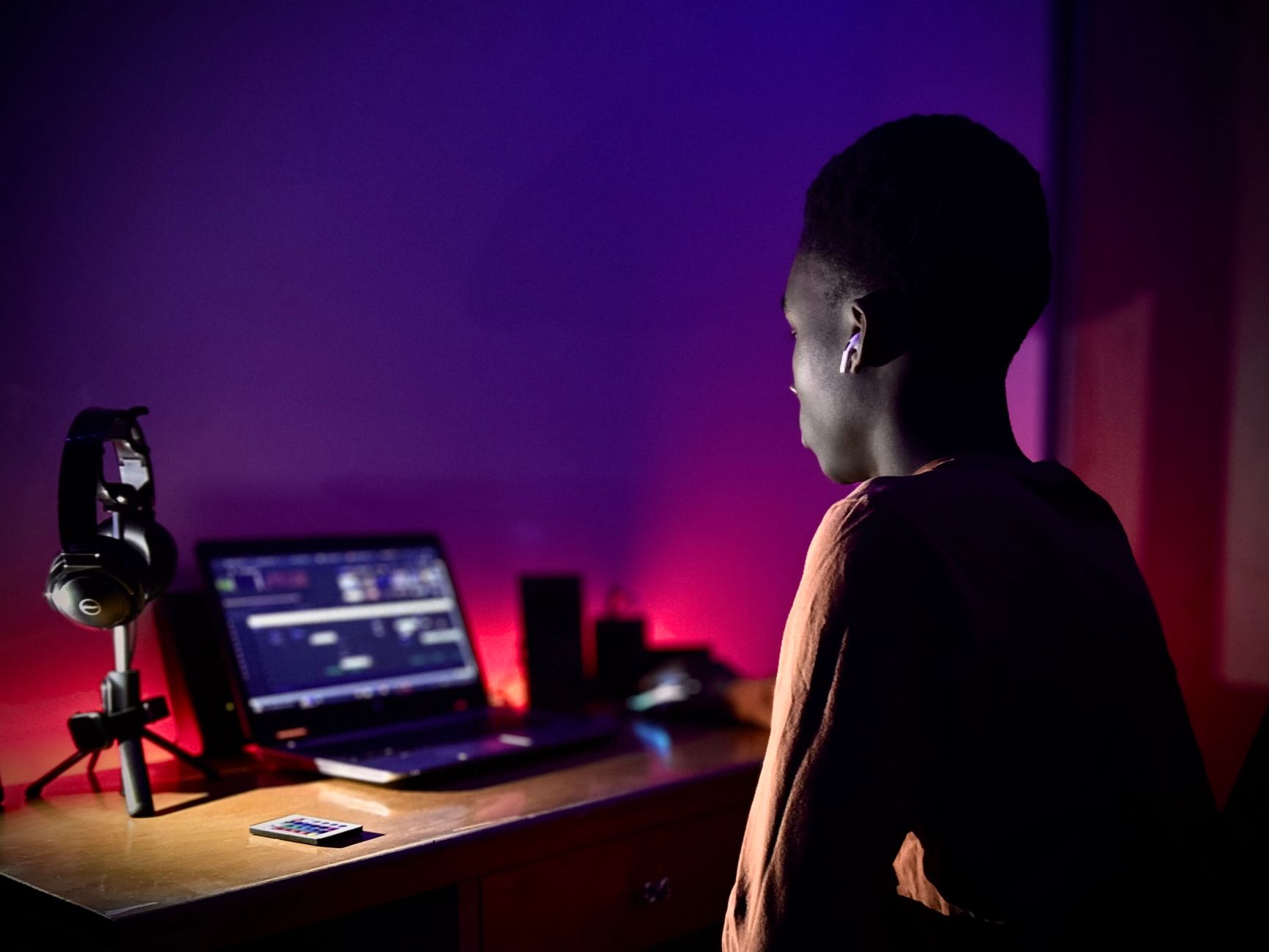
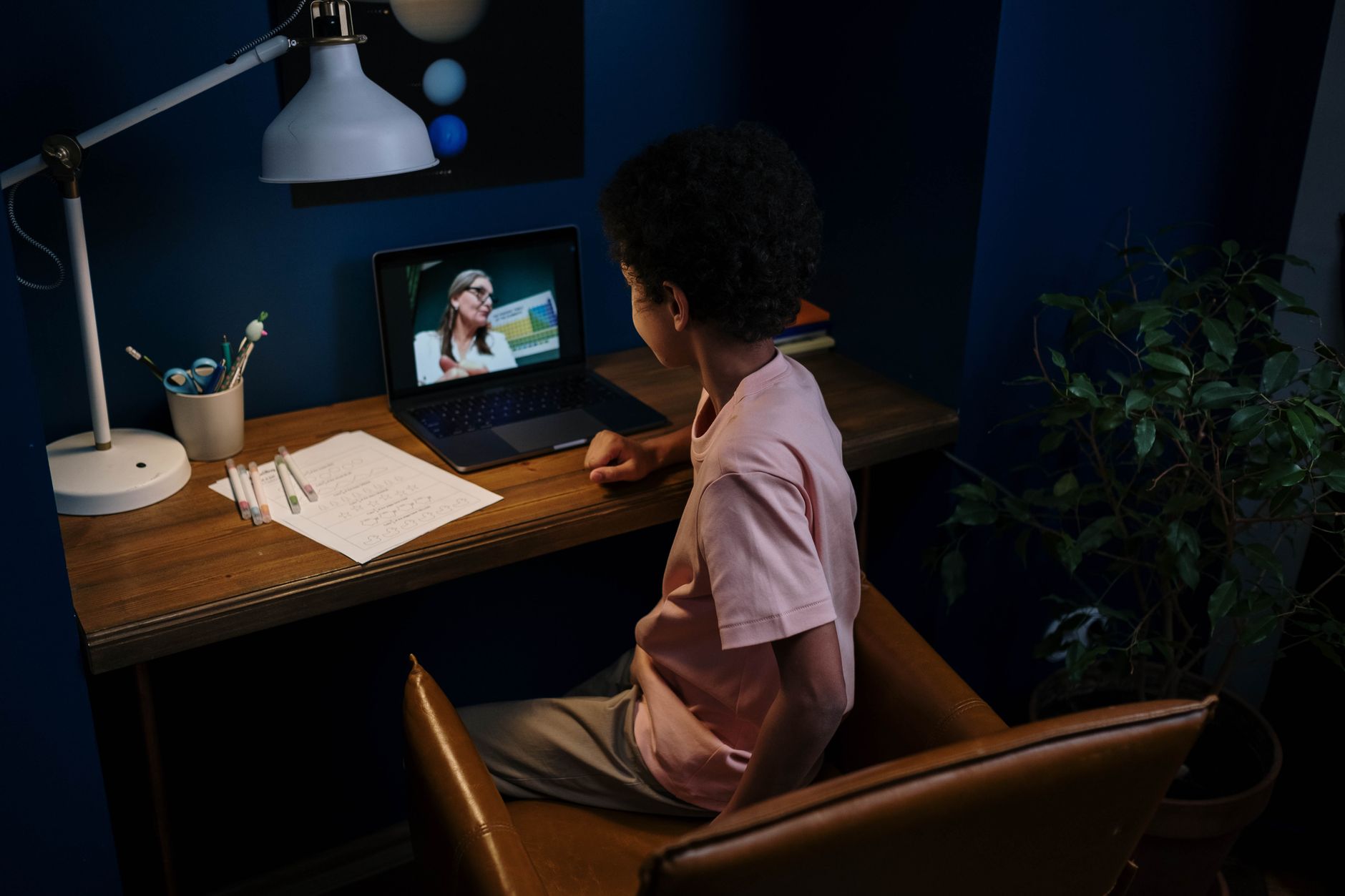
It's 5:40 p.m. on a Tuesday in December. Outside, it's been dark for twenty minutes. You get home, switch on a single lamp, and open your laptop. A face appears: someone as badly lit as you are, in a room with just as poor a colour temperature, with the same greyish complexion and the same end-of-day expression.
You tell yourself people are gloomy at the moment. You're not wrong. But you're conflating two things: what winter does to people, and what winter does to the image. Both are at work at the same time, and both can be fixed — just not in the same way.
Random video chat is a deeply seasonal activity. It's not just a feeling: traffic on video and chat platforms climbs mechanically as evenings stretch out and going out becomes expensive and cold. Between late November and late February, there are more people online, for longer, at later hours — and a collective image quality that collapses because nobody has daylight anymore.
What the Season Objectively Changes
Daylight ends before you do
In Paris, the sun sets around 4:55 p.m. near the winter solstice, compared with 9:58 p.m. in late June. Between the two, you lose roughly five hours of usable natural light per day. For webcam use, that's not an aesthetic detail: it's the disappearance of the only light source you had that was free, broad, soft and well positioned.
The concrete result: from May to September, a large share of video chat sessions happen with some daylight, even indirect. From November to February, virtually all connections take place under artificial light. And the average French domestic lighting setup — a cool-white LED ceiling fixture, or a shaded lamp sitting behind you — is just about the worst possible arrangement for a filmed face.
Your webcam sensor hates winter
All small cameras — built-in webcams, smartphone modules — work on the same trade-off: when light drops, they compensate by raising the gain (sensitivity) and lengthening the exposure time. Both come at an immediate cost:
| Compensation | Visible consequence | |---|---| | Higher gain / ISO | Digital noise, coloured grain, skin that seems to "crawl" | | Longer exposure time | Motion blur as soon as you move your head | | Drop in frame rate | Image that looks slowed down, choppy gestures | | More aggressive compression | Face dissolving into blocks when you speak |
In other words, the same person, in the same room, with the same gear and the same connection, is objectively less sharp in January than in June. You haven't deteriorated; your ambient lighting has lost several notches.
Mood isn't a metaphor
The seasonal drop in brightness has documented effects on mood. L'Assurance Maladie and Vidal describe seasonal depression (or seasonal affective disorder) as a recurring depressive episode linked to shortening days, usually starting in autumn and clearing up in spring, with a fairly characteristic cluster of symptoms: fatigue, hypersomnia, sugar cravings, loss of drive, social withdrawal. Mild forms, sometimes called the "winter blues", are far more widespread than diagnosed cases.
This has two very concrete consequences for anyone using video chat in winter:
- Your conversation partners are statistically more tired and slower to warm up. A sluggish start isn't necessarily disinterest.
- So are you. Your own tolerance for rejection, your energy for opening up and your patience with silences are all lower in February than in June.
The classic winter mistake is to read a collective dip in energy as a dip in platform quality — then to skip three times faster, which guarantees you'll only ever land on the opening seconds of conversations.
Rebuilding Light When There Isn't Any
The basic rule: one source in front, broad and warm
The whole challenge of winter lighting comes down to three words: front, broad, soft.
- Front: the light must come from your side of the screen, not from behind you. A ceiling fixture placed above and slightly behind you hollows out the eye sockets and lights up your scalp. A light placed behind your screen, facing you, fills in the face.
- Broad: a point source (bare bulb, small spot) produces hard shadows. An extended source (a panel, a light shade, a white wall used as a reflector) gives a far more flattering result.
- Soft: no light aimed straight at your face, burning out your forehead and making you squint. You want fill light, not an interrogation.
The simplest and most cost-effective setup remains an LED panel with adjustable colour temperature placed behind the screen, at face height or very slightly above. A model with a dimmer is plenty: the point isn't maximum output, it's being able to go low enough to look believable at 11 p.m.
The trap of mixed colour temperatures
A detail almost everyone gets wrong in winter: mixing several sources of different colours. Your LED ceiling light is 5,000 K (cool white), your bedside lamp 2,700 K (very warm white), and the screen in front of you throws out a blue cast. The webcam, unable to choose, sets its white balance to an absurd compromise: half your face turns bluish and the other half orange.
The fix is free: turn everything off except one family of sources. A single colour temperature, even an imperfect one, looks better than three temperatures in conflict. If you're buying new bulbs for the room where you chat, dimmable 3000K LED bulbs give a warm, stable rendering that holds up well into the night.
The screen as emergency lighting
Got nothing else? Open a blank white page full-screen in a second window, or dim the room and turn up your screen brightness. Screen light is broad and frontal by nature — one of the best improvised fill lights there is. Its weakness: it's cool-toned and flickers slightly depending on what's displayed. A plain, light, static background solves both problems.
Problems Specific to the Cold Season
Heating noise
From October to March, a new background noise moves in: fan heater, boiler, heat pump, portable heater fan, wood stove. These sources produce continuous, broad-spectrum noise — exactly the kind of signal software noise reduction handles best… but at the price of a voice that turns metallic and slightly submarine.
The hierarchy of solutions, best to worst:
- Move the mic away from the source (or the source away from the mic).
- Bring the mic closer to your mouth — a headset or a USB lavalier mic makes background noise disappear better than any software processing, simply because the signal-to-noise ratio improves at the source.
- Turn on the system's noise suppression.
- Do nothing and hope the other person tolerates it.
Cold hands and drifting framing
A trivial detail with a real effect: in winter you chat bundled up, often under a blanket, often lying down, often holding a phone with a hand that gets tired. The framing drifts towards low angles, chin and ceiling. If most of your winter sessions happen on mobile from the sofa, a small tabletop tripod with a smartphone clamp changes more than any conversation tip: it locks the angle once and for all and frees up both your hands.
Dry air and your voice
Heating dries out indoor air. L'INRS points out that overly low relative humidity in interior spaces encourages respiratory discomfort and irritation of the mucous membranes — which, in practice, means: scratchy throat, voice cracking, little coughs after twenty minutes of continuous talking. If you're stringing long sessions together, a bottle of water within reach and a break every forty minutes do more for your voice than any audio setting.
The Hidden Upside: Winter Favours Real Conversations
Not everything needs fixing. The cold season offers objectively better ground for what most people are actually looking for in video chat: exchanges that last.
More people, for longer
Connection behaviour follows the weather and the light. In summer, a video chat session gets interrupted by a thousand things: café terraces, evenings out, daylight that never ends. In winter, the person facing you has nothing planned. They're not about to leave. That's the difference between someone who grants you ninety seconds and someone with no reason to go anywhere for half an hour.
A conversation context handed to you
Winter hands you for free what people scrabble for in August: instant common ground. The weather, darkness at 5 p.m., heating bills, the holidays coming up, the ski trip or the lack of one, the series you're binging, the dish you're slow-cooking. These aren't deep subjects, but they are reliable launch ramps, and they work with nearly everyone in the northern hemisphere.
Hemispheric asymmetry
This is one of the most underused assets of random video chat in January: on the other side of the world, it's summer. Landing on someone in Brazil, Argentina, South Africa or Australia in the middle of February means starting on an asymmetry that interests everyone: you've got gloves and frost, they've got an open window and 31 °C. In that context, showing your window becomes one of the most effective moves there is.
Adjusting Your Schedule to the Season
Time slots don't behave the same way in winter.
| Time slot | In summer | In winter | |---|---|---| | 5 p.m. – 7 p.m. | nearly deserted | real traffic already, calm mood | | 9 p.m. – 11 p.m. | moderate | clear peak, high share of long sessions | | Midnight – 2 a.m. | low | active, more intimate conversations, more fatigue | | Sunday afternoon | dead zone | one of the best moments of the week |
The practical rule: in winter, shift your sessions earlier. The 6 p.m. crowd in January looks a lot like the 9 p.m. crowd in July. It's also a slot where you're still fresh, which matters more than people think for the quality of your first fifteen seconds.
Taking Care of Yourself, Not Just Your Image
That leaves the least technical and most important part. If every autumn you notice a drop in energy, a need for more sleep, a tendency to withdraw and to replace all social life with hours of scrolling through faces, that's not a character flaw: it's a fairly ordinary seasonal pattern, described by l'Assurance Maladie and Santé publique France, for which simple responses exist.
The two most widely agreed-upon levers:
- Morning light. Spending twenty to thirty minutes outdoors early in the day, even under cloud cover, delivers a light intensity no interior can match. For those who can't, light therapy is the subject of converging recommendations: a 10,000 lux light therapy lamp used in the morning, thirty minutes, at the distance specified in the instructions. Medical advice is worthwhile in cases of diagnosed mood disorders or eye conditions.
- Movement. Regular physical activity remains one of the few levers with a documented effect on winter mood. Even modest, even indoors.
And one lever specific to our subject: don't let video chat replace everything else. It works very well as a supplement to social life in winter — a warm interlude, human contact at 10 p.m. on a Tuesday. It works very badly as a sole substitute. The dividing line is fairly easy to spot: you come out of a winter session feeling better (good sign), or emptier than before (time to stop).
If sessions stretch to the point of systematically eating into your sleep — already fragile in winter — the remedy isn't better lighting, it's a cut-off time. A plain old alarm clock set outside the mental digital bedroom, meaning an alarm set for midnight, often does more than all the good intentions in the world.
Recap: the Winter Checklist
Do it once, in November, and you're sorted until March:
- One frontal light source behind the screen, at face height, dimmable.
- A single colour temperature in the room during sessions.
- The ceiling light off or, at the very least, out of the background.
- A mic close to your mouth if a heater is blowing in the room.
- A fixed mount if you chat on your phone under a blanket.
- Water within reach, and a break every forty minutes.
- Sessions shifted one to two hours earlier compared with your summer habits.
- A cut-off time decided before you start, not during.
Winter doesn't degrade video chat. It shifts the work: less effort needed to find someone available, far more effort needed to be properly visible. Those who only fix the first point spend the season wondering why they keep getting skipped. Those who adjust a lamp in ten minutes discover that January is, by far, the best month of the year for talking to strangers.