· by Rédaction
Covered Webcam, Camera Off: Why So Many Women Show Up to Video Chat With No Picture
Lens cover, camera off, blurred image: why women show up without video on random chat, and how to react so they switch it on.
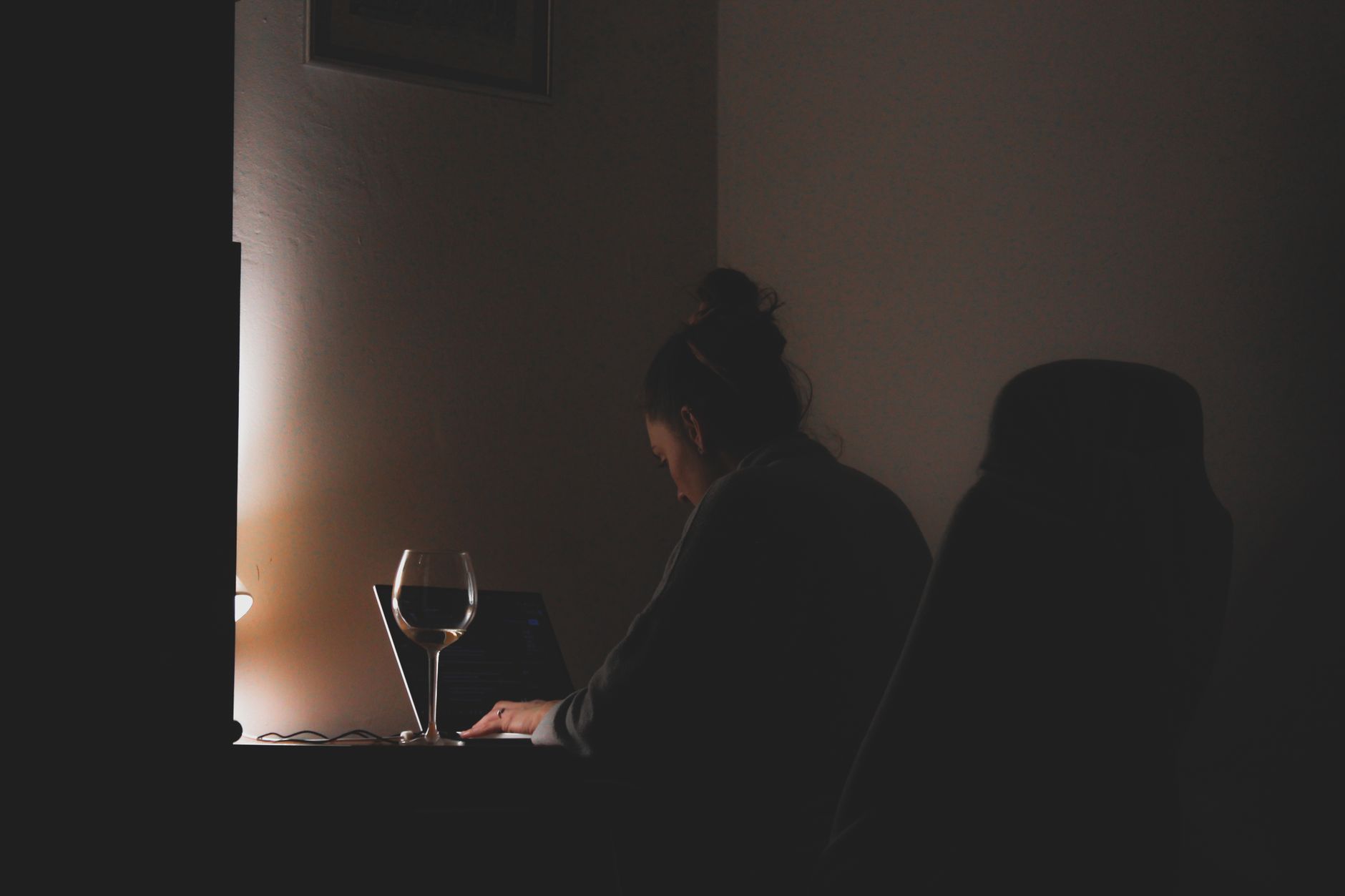
You click. The screen on the other side stays black. Sometimes it isn't quite black: you can make out a ceiling, a lamp, a patch of wall. Sometimes a little plastic rectangle slid across the lens. And in the text window, a sentence arrives: "hi, I'm not turning the cam on right away".
The most common reaction is the next click. That's understandable: you came for a video chat, and what you've got in front of you is a written conversation. But you've just walked past one of the most informative setups in random chat on the female side. That black screen isn't a malfunction, and it's almost never a fake profile. It's an airlock.
Understanding that airlock — why it exists, what makes it open, and the three mistakes that lock it for good — changes the shape of your sessions far more than any technical setting.
The Lens Cover Has Become an Ordinary Object
A reflex that comes from cybersecurity, not from video chat
Before it was a random-chat behaviour, covering your webcam was official advice. ANSSI (the French national cybersecurity agency), in its awareness leaflets for the general public, and the CNIL (the French data protection authority), on its pages about connected devices and webcams, both point to the existence of malware capable of switching on a camera without the user knowing. The technical term, "camfecting", has been circulating since the 2010s; the CNIL explicitly recommends physically blocking the lens when it isn't in use. Public figures have popularised the gesture — the photos of Mark Zuckerberg's desk with a piece of tape over the camera went round the world in 2016, and the US FBI has issued comparable recommendations.
The result: most laptops sold today come with a factory-fitted mechanical shutter, and for a few euros you can find a sliding adhesive webcam cover in any computer aisle. So a woman who turns up on a video chat with her camera closed hasn't necessarily made a special decision about you: she has simply left in place a device she uses all day long.
The initial misunderstanding
On the male side, the black screen reads as a personal refusal, or even as deception: "if she isn't turning it on, she isn't really there", "it's a bot". On the female side, it's the opposite: the closed camera is the default state, and turning it on is an active decision that requires a reason.
That asymmetry explains a good share of the conversations that collapse within fifteen seconds. You're waiting for her to take the first step — showing her face. She's waiting for you to give her a reason.
What Switching On a Face Really Costs
The image is the only piece of data you can't take back
A first name can be changed, a town invented, an age rounded off — that's exactly the subject of what they give away and what they hold back about their identity. A face, no. Once it's broadcast, it can be captured, searched and reused.
This isn't an abstract fear. Reverse image search is available to everyone; consumer facing-recognition tools have been the subject of formal notices and penalties in Europe, notably the CNIL's sanction against Clearview AI in October 2022 for unlawfully collecting photographs of faces. And the generation of faked images from a single photo of a face has been documented by the Council of Europe as one of the emerging forms of digital violence against women — a risk we covered in detail in the article on screenshots and AI "nudification".
In other words: in the inventory of what a woman can hand over in random chat, her live face is the most expensive item. Keeping it off for the first few minutes isn't coyness, it's risk management.
The background is data too
Many people underestimate the second layer. A camera that's switched on doesn't just show a face: it shows a room. A diploma on the wall, an envelope on the desk, a view out of the window, a regional furniture brand. Open-source investigators make a living out of reconstructing a location from exactly that kind of detail.
Hence two very widespread intermediate solutions, which you need to learn to recognise:
- the blurred or replaced background, via the browser's built-in feature or a third-party app;
- defensive framing: camera tilted towards a bare wall, front lighting turned down, sometimes just a warm-light desk lamp used to flatten the details of the background.
If you see a deliberately poor image, it's usually not a hardware fault. It's a chosen frame. Background and lighting actually have their own article on the settings side: getting your background and lighting right in video chat.
The Four Reasons That Have Nothing to Do With You
Before concluding you've been rejected, run through the most frequent causes. They're mundane.
| Situation | What you see | What's actually going on | | --- | --- | --- | | People around her | Black screen, quick replies in text | A flatmate, a friend in the room: discretion comes first — the logic described in two-person sessions | | Testing the room | Camera closed, then open after ten minutes | She's assessing the platform's noise level before exposing herself | | An unshowable setting | Partial image, ceiling, wall | Unmade bed, laundry drying, loungewear: no desire to put her room on display | | Deliberate text mode | Mic off, cam off | She came to talk, not to be looked at — a choice documented in the article on the closed mic |
None of these four situations is about you. In three of them, the camera may well come on later in the conversation. In the fourth, it won't, and that isn't up for negotiation.
The Mistake of Demanding Reciprocity
"I turned mine on, your turn"
This is the most frequent and the most counterproductive line there is. It starts from a sound intuition — reciprocity is a powerful social driver, widely described in Robert Cialdini's work on influence — and applies it to the wrong object.
The problem is that the exchange isn't symmetrical. For a man on a random chat, showing his face costs little: the risk of targeted harassment, capture and reuse is statistically far lower. The major European surveys on violence against women — the FRA's in 2014, then the joint Eurostat/FRA/EIGE survey on gender-based violence published in 2022 — show markedly higher exposure of women to sexual online harassment. So the same action doesn't carry the same price.
Demanding reciprocity means asking the other person to pay ten for what cost you one. And above all: it turns the conversation into a transaction, which is exactly the signal she's trying to avoid.
The three lines that close the door for good
- "Turn it on or I'll next you." You've just reduced your entire interest to an image. She'll save you the time by nexting first.
- "Why are you hiding? Got something to hide?" Flipping it into an accusation is read as pressure, not as a question.
- "Just two seconds, so I can see." The "just" and the "so I can see" say the objectification out loud.
What Actually Lifts the Curtain
Give a reason to switch on, not an obligation
The accounts gathered by cyberviolence prevention organisations and the public discussions among women users converge on one point: the camera comes on when it becomes useful to the conversation, not when it's demanded.
In practice, it looks like this:
"Let me show you something, two seconds."
And you show it. An instrument, a dish you're cooking, a book, a pet wandering past. You occupy the video channel with something other than your face. Two things happen: you prove your camera works without making it an argument, and you create a shared object. The mechanism is spelled out in the article on the objects that save a conversation.
In that register, the hardware matters a little: a webcam with a built-in shutter lets you do exactly the opposite of the dreaded gesture — opening and closing it deliberately, in plain sight, which is in itself a sign of good faith. And if you mostly work with headphones on, a headset with a folding boom mic avoids the "surveillance studio" effect that makes people uncomfortable.
Accept text as a format, not as a consolation prize
A written conversation with both cameras closed can last twenty minutes and be far better than three hundred video connections. The best openings often start that way: she writes, you answer, she laughs at a line, and at some point she switches it on — or she doesn't, and you've had a conversation anyway.
If you type a lot in these sessions, typing comfort becomes a real factor: a quiet mechanical keyboard changes how smoothly this kind of exchange flows, and above all it avoids the metallic clatter the mic sends to the other side.
The real rhythm
Regular women users almost all describe the same progression, in stages:
- Text only, camera closed, two to five minutes. She's reading the way you write: spelling, patience, the presence or absence of a demand.
- Audio or a partial image. The mic opens, or the camera shows a hand, a mug, a corner of the room.
- Face, sometimes badly framed, often at an angle.
- Face on, straight to camera, normal conversation.
What matters is that you never try to skip a stage. Every attempt at a shortcut sends you back to stage 1 — or ends the conversation. The logic of these successive thresholds ties in with what we described in the rules they set before they talk.
Telling a Closed Camera From a Fake Profile
This is the one legitimate objection: some black screens aren't cautious people but setups. The signs aren't the same.
A genuine black screen:
- answers specific, unpredictable questions ("is it raining where you are?");
- writes with typos, hesitations, changes of subject;
- doesn't send you any links;
- sometimes has the mic open with real room noise.
A setup or a bot:
- pushes very fast towards an outside platform, a "real profile", a link to click;
- answers beside the point, or with lines that are too smooth and always flattering;
- shows a pre-recorded video on a loop, with a gaze that never reacts to anything you say.
The distinction deserves a full examination of its own: we laid it out in the article on fake female profiles, looping videos and paid links. Remember the simple rule: a closed camera never asks you for anything. A scam always asks for something.

And on Your Side: Should You Close Yours?
It's a fair question, and the answer is nuanced.
Keeping your camera permanently closed on a random video chat condemns you to very short sessions: on the female side, a man with no image is read as maximum risk. The accounts are unanimous on this point, and it's one of the reasons for instant skipping noted in the first thirty seconds seen from the other side.
Reasonable caution, on the other hand, does exist:
- keep a physical shutter and close it when you're not chatting;
- don't chat in a room where your address, your name or your workplace is legible — an acoustic panel or a simple background screen does the job nicely, and improves your sound into the bargain;
- check in your browser settings which sites have permission to access the camera, as the CNIL recommends for all devices;
- assume that anything you show can be recorded. That goes for everyone, in both directions.
Key Takeaways
The black screen isn't a wall, it's a door with a peephole. Behind it, someone is watching you and working out, from a few lines of text, whether opening up is worth the risk.
The three moves that work are elementary, and almost nobody makes them:
- Never ask for the picture. Not once, not "nicely", not "just to see".
- Make the video useful for something else. Show an object, a place, an animal — not your face as a bargaining chip.
- Accept that the answer may be no, and stay in the conversation anyway. It's precisely that acceptance which, half the time, gets the camera switched on ten minutes later.
Random video chat is one of the few spaces where time works in your favour: staying three minutes longer than the ninety-nine before you already puts you in a category of your own. You can test the difference on your next session on Camrumble, or revisit how other women describe what they really want from a first exchange.
Sources cited: CNIL (fact sheets on webcams and connected devices, and the Clearview AI sanction, October 2022); ANSSI (general-public recommendations on device security); European Union Agency for Fundamental Rights (FRA), survey on violence against women, 2014; Eurostat / FRA / EIGE survey on gender-based violence, 2022; Council of Europe, recommendation on the digital dimension of violence against women, 2021; Robert Cialdini, Influence: The Psychology of Persuasion.


